
What Should You Do After a Car Accident in Tempe, Arizona? A Step-by-Step Guide
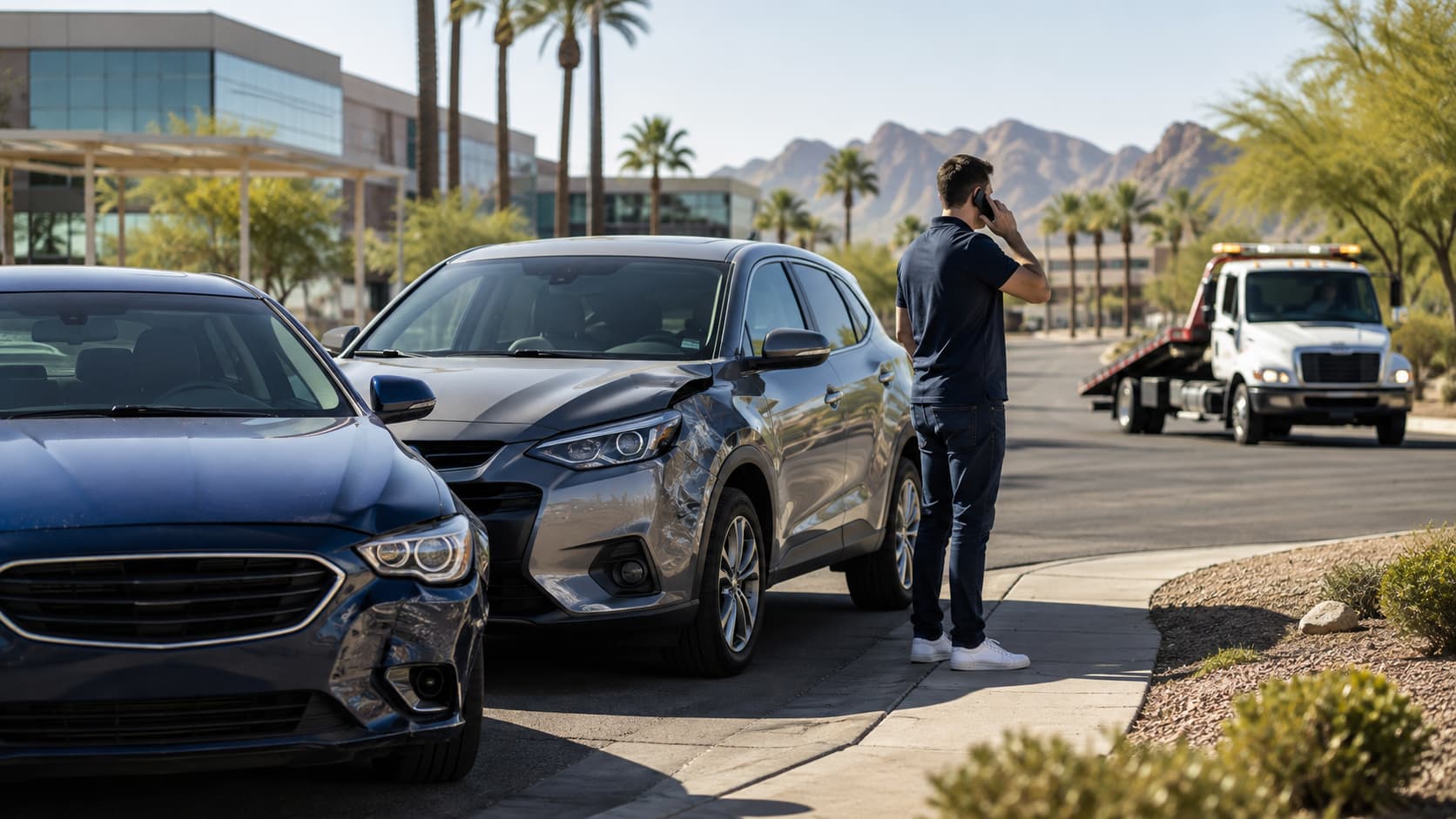
A car accident can leave you shaken, confused, and unsure about what to do next. Even a relatively minor collision can create questions about safety, towing, insurance, repair costs, and whether your vehicle can still be driven.
The decisions you make immediately after an accident can affect your safety and make the insurance and collision repair process easier to navigate.
At Arizona Collision Center, we have helped Tempe and Phoenix-area drivers recover from accidents for years. Our team understands that most people do not deal with collision claims very often. We are here to answer your questions, explain the repair process, and help return your vehicle to its proper condition.
If you have been involved in an accident in Tempe, follow these steps to protect yourself, document the damage, and begin the repair process.
What Should You Do Immediately After a Car Accident?
After a car accident, move to a safe location when possible, check for injuries, contact emergency services when necessary, exchange information, photograph the scene, notify your insurance company, and have the vehicle inspected before continuing to drive it.
Your safety should always be the first priority. Vehicle damage can be addressed later.
1. Move to a Safe Location
If the vehicles are creating a hazard and can be moved safely, relocate them to the shoulder, a nearby parking lot, or another secure area. Turn on your hazard lights and remain alert to surrounding traffic.
Accidents on Loop 101, Loop 202, Rural Road, Scottsdale Road, Rio Salado Parkway, or another busy Tempe roadway can place drivers and passengers close to fast-moving traffic. Do not stand between vehicles or remain in an active traffic lane.
If the vehicle cannot be moved, stay in a safe location and wait for emergency assistance.
2. Check for Injuries
Check yourself, your passengers, and others involved in the collision. Call 911 if anyone is injured, if a vehicle is blocking traffic, or if emergency assistance is needed.
Some injuries may not be immediately obvious because adrenaline can temporarily mask pain. Seek appropriate medical attention if you experience discomfort, dizziness, confusion, limited movement, or any other concerning symptom.
3. Contact the Appropriate Authorities
Depending on the severity and circumstances of the accident, law enforcement may need to respond. A police report can document important information about the crash and may be requested during the insurance process.
Do not speculate about what caused the accident or argue with the other driver. Remain calm, provide accurate information, and allow the proper authorities and insurance companies to evaluate the circumstances.
4. Exchange Information
Collect the following information from the other driver:
- Full name
- Phone number
- Driver’s license information
- Insurance company and policy information
- Vehicle make and model
- License plate number
- Name of the vehicle’s registered owner, if different from the driver
Avoid photographing or sharing more sensitive personal information than is necessary for reporting the accident and processing the claim.
5. Document the Accident Scene
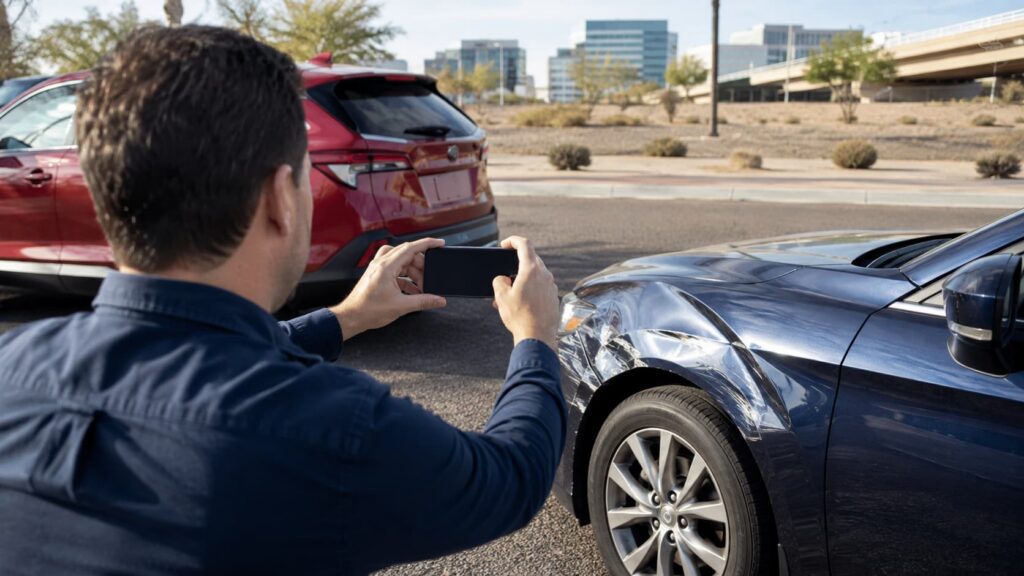
Use your phone to take photographs and videos before the vehicles are moved, provided you can do so safely.
Document:
- All sides of every vehicle involved
- Close-up images of visible damage
- License plates
- Vehicle positions
- Traffic lanes
- Road conditions
- Traffic lights and signs
- Skid marks
- Broken vehicle parts or debris
- The surrounding intersection or accident location
Take more photos than you think you need. Wide images provide context, while close-up images capture the details of the damage.
If witnesses saw the collision, ask for their names and contact information. Their account may help clarify what happened.
6. Notify Your Insurance Company
Contact your insurance carrier and provide accurate information about the accident. Ask what documentation is required and write down your claim number and the adjuster’s contact information.
You do not have to understand every part of the collision repair process before making the call. At Arizona Collision Center, we offer claims assistance and can help explain estimates, repair procedures, supplemental damage, and communication with the insurance company.
7. Decide Whether Your Vehicle Is Safe to Drive
A vehicle that appears drivable may still have hidden mechanical, structural, electrical, or safety-related damage.
If you are uncertain about its condition, do not take the risk. Arrange for towing and have the vehicle inspected by a qualified collision repair facility.
Can You Drive Your Car After an Accident?
You should not drive a vehicle after an accident if it is leaking fluid, smoking, overheating, pulling to one side, making unusual noises, displaying warning lights, or has damaged wheels, tires, lights, steering, suspension, glass, or loose body panels.
Driving a damaged vehicle can make the damage worse and may place you, your passengers, and other drivers at risk.
Watch for these warning signs:
- Fluid leaking underneath the vehicle
- Smoke, steam, or a burning smell
- Airbag deployment
- A damaged wheel or tire
- Steering that feels loose or pulls to one side
- Grinding, scraping, or rubbing noises
- A hood, trunk, or door that will not close securely
- Broken headlights, brake lights, or turn signals
- Loose bumpers or body panels
- Cracked glass that interferes with visibility
- Dashboard warning lights
- An engine that runs roughly or overheats
- Damage near the suspension or undercarriage
Modern vehicles contain cameras, radar units, impact sensors, wiring, and advanced driver-assistance systems behind bumpers, mirrors, windshields, and body panels. A collision can affect these systems even when the exterior damage appears minor.
When in doubt, have the vehicle towed.
Arizona Collision Center has partnered with All City Towing for towing and roadside assistance. Drivers can contact All City Towing directly at (480) 833-7278.
Do You Have to Use the Body Shop Your Insurance Company Recommends?
No. In Arizona, an insurance company may recommend a repair facility, but it cannot force you to use a specific body shop.
Arizona law gives insured drivers and claimants the right to select a repair facility for covered vehicle damage, subject to the notice requirements of the applicable policy. The Arizona Department of Insurance and Financial Institutions also explains that an insurer cannot force a customer to use a particular repair shop.
The insurance company may provide a list of preferred or network facilities. You can consider those recommendations, but the final decision belongs to you.
Choose a collision center based on factors such as:
- Training and certifications
- Experience repairing your type of vehicle
- Use of manufacturer repair procedures
- Quality of equipment and technology
- Reputation
- Warranty coverage
- Communication
- Willingness to explain the repair plan
- Attention to structural and safety-related details
Arizona Collision Center is an I-CAR Gold Class collision repair facility and a recognized repair facility for major vehicle manufacturers. Our team follows applicable manufacturer repair procedures because repairing a vehicle properly involves more than making the exterior look good.
What Should You Bring to a Collision Repair Estimate?
Bring your vehicle, insurance claim information, driver’s license, registration, insurance card, accident photographs, police report information, and any correspondence from the insurance company.
If the vehicle cannot be driven safely, arrange to have it towed directly to the body shop.
Helpful information includes:
- Insurance claim number
- Adjuster’s name and contact information
- Date and location of the accident
- Photographs or videos
- Police report number
- Information about previous repairs
- Details about warning lights or drivability problems
- Any estimates already completed
Do not worry if you do not have every document immediately. Our team can explain what is needed and help you organize the next steps.
How Does a Collision Repair Estimate Work?
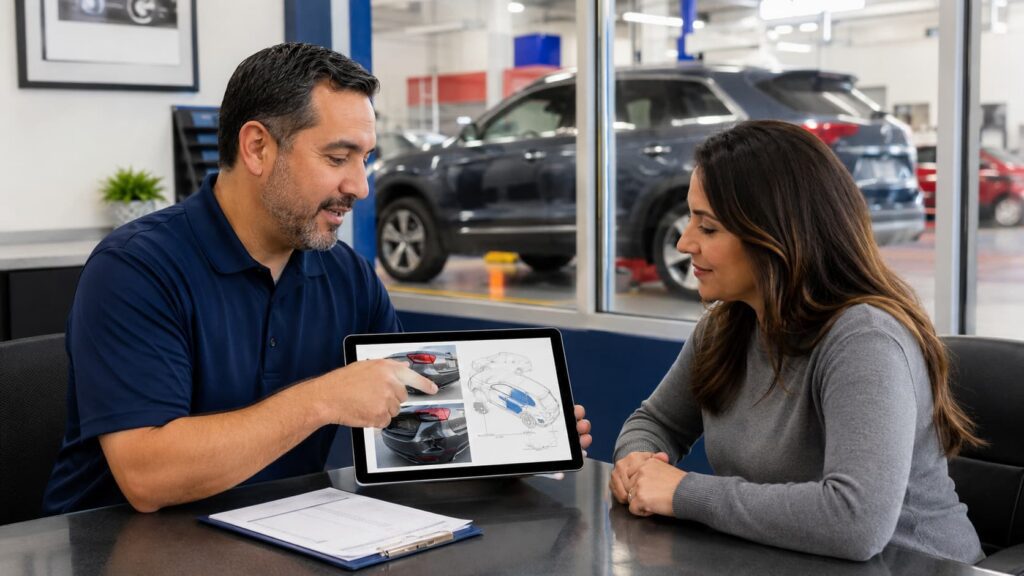
A collision repair estimate begins with a visual inspection of the visible damage. The estimator documents the affected areas, identifies necessary repairs, evaluates parts requirements, and creates an initial repair plan.
That first estimate is an important starting point, but it may not reveal all of the damage.
The typical process includes:
- Inspecting and photographing the vehicle
- Documenting visible damage
- Preparing the preliminary estimate
- Communicating with the customer and insurance company
- Obtaining repair authorization
- Disassembling damaged areas when necessary
- Identifying hidden damage
- Preparing a supplement or updated repair plan
- Ordering the appropriate parts
- Completing structural, body, mechanical, and refinishing work
- Performing necessary calibrations and system checks
- Inspecting the completed repairs
- Cleaning and preparing the vehicle for delivery
Arizona Collision Center offers free collision repair estimates. Drivers can also begin the process through our online photo-estimate system, which typically provides a response within one business day.
Why Can an Initial Estimate Change?
An initial collision estimate can change when technicians discover damage that was hidden behind the bumper, body panels, trim, interior components, or other parts during the first visual inspection.
This additional documentation is often called a supplement. Supplements are a normal part of many collision repairs because an estimator cannot see through the exterior of the vehicle.
Hidden collision damage may involve:
- Bumper reinforcements
- Energy-absorbing components
- Frame or structural sections
- Mounting points
- Suspension parts
- Cooling components
- Wiring and connectors
- Airbag components
- Cameras and sensors
- Exhaust components
- Wheel alignment
- Interior brackets and fasteners
A small dent or cracked bumper cover does not always indicate a small repair. The exterior surface may return to its original position while components behind it remain bent, cracked, disconnected, or misaligned.
A qualified body shop will document this damage and update the repair plan rather than ignoring what was not visible during the original estimate.
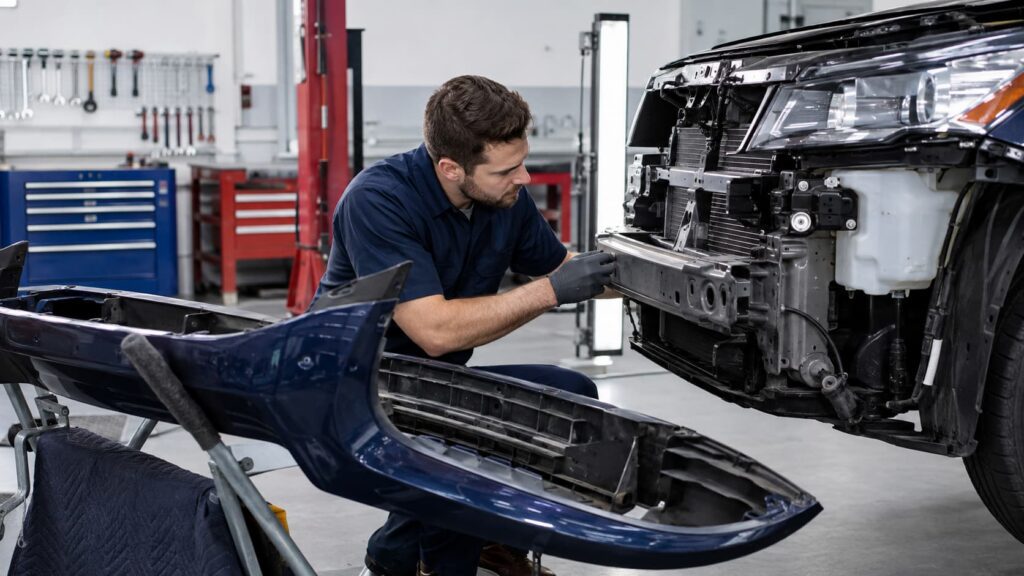
Why Proper Collision Repair Procedures Matter
Today’s vehicles are built with sophisticated materials, safety systems, electronics, and carefully engineered structures. Repairing them correctly requires more than replacing a damaged panel and matching the paint.
Depending on the vehicle and type of collision, the repair may require:
- Manufacturer-specific repair information
- Structural measurements
- Specialized welding or joining techniques
- Sectioning procedures
- OEM or appropriate replacement parts
- Corrosion protection
- Paint refinishing and color matching
- Wheel alignment
- Diagnostic scanning
- Camera, radar, or sensor calibration
- Quality-control inspections
A vehicle can look repaired while still having problems underneath. That is why training, equipment, documentation, and manufacturer procedures are so important.
At Arizona Collision Center, our objective is not simply to make the damage less noticeable. We want to restore the vehicle properly and give our customers confidence in the work performed.
What Is a Post-Repair Inspection?
A post-repair inspection is an evaluation of collision work that was previously completed by another repair facility. It can help identify incomplete, improper, or overlooked repairs.
Consider requesting a post-repair inspection if:
- The vehicle pulls or handles differently
- Warning lights remain illuminated
- Panels do not align correctly
- Paint color or texture does not match
- Wind or water enters the vehicle
- Doors, the hood, or the trunk do not close properly
- New rattles or noises appear
- Safety features do not operate normally
- You are concerned that the repair was rushed
- Something simply does not feel right
Arizona Collision Center provides complimentary post-repair inspections. If we identify a concern, we will explain what we found and discuss the available options for correcting the previous repair.
How Long Does Collision Repair Take?
Collision repair time depends on the extent of the damage, vehicle construction, parts availability, insurance approval, required calibrations, and whether additional damage is discovered after disassembly.
A bumper repair may take far less time than a collision involving structural components, airbags, suspension, electronics, or several damaged panels.
No honest collision center can provide one timeline that applies to every accident. After the vehicle has been inspected and the repair plan is developed, the shop can provide a more informed estimate of the expected completion time.
Clear communication matters. Our team works to keep customers informed as their vehicle moves through the repair process.
Can a Body Shop Help With an Insurance Claim?
Yes. A collision repair shop can help document damage, prepare estimates and supplements, communicate repair-related information to the insurer, and explain the repair process to the vehicle owner.
The insurance company determines coverage based on the policy and claim. The collision center determines what procedures are necessary to repair the vehicle properly.
Arizona Collision Center has extensive experience working with insurance companies, adjusters, and vehicle owners. Our claims assistance is designed to make an already stressful situation easier to understand.
Collision Repair Near Loop 101 and Tempe Marketplace
Arizona Collision Center is conveniently located in Tempe near Loop 101 and Rio Salado Parkway, across from Tempe Marketplace.
Our Tempe body shop serves drivers from:
- Tempe
- Phoenix
- Scottsdale
- Mesa
- Chandler
- Gilbert
- Surrounding East Valley communities
Whether your accident occurred on Loop 101, Loop 202, Rio Salado Parkway, Scottsdale Road, Rural Road, or a neighborhood street, our team can help you determine what your vehicle needs.
Get a Free Collision Repair Estimate in Tempe, Arizona
If you have been involved in an accident, you do not have to work through the repair process alone.
Arizona Collision Center provides collision repair, bumper repair, paintless dent repair, paint and refinishing, claims assistance, post-repair inspections, and other auto body services. We repair all types of vehicles and follow established repair procedures to help restore their appearance, function, and safety.
Contact us for a free estimate:
Arizona Collision Center
215 S. Industrial Drive
Tempe, AZ 85281
Phone: (480) 668-3105
Our shop is open Monday through Friday from 8:00 a.m. to 5:00 p.m. Saturday appointments are available by request.
Call Arizona Collision Center or submit your photos through our online estimate system. We will help you understand the damage, the repair process, and what should happen next.
Frequently Asked Questions About Car Accidents and Collision Repair
What should I do immediately after a car accident in Tempe?
Move to a safe location when possible, check for injuries, contact emergency services when needed, exchange driver and insurance information, photograph the vehicles and accident scene, and notify your insurance company. Do not drive the vehicle if it appears unsafe.
When should a damaged vehicle be towed?
Have the vehicle towed if it is leaking fluid, smoking, overheating, making unusual noises, pulling to one side, displaying warning lights, or has damaged tires, wheels, steering, suspension, glass, lights, or loose body panels. When uncertain, towing is safer than risking further damage.
Can I choose my own body shop in Arizona?
Yes. Arizona drivers and claimants have the right to choose a repair facility, subject to the notice requirements of the applicable insurance policy. An insurer may recommend a facility but cannot force you to use a specific body shop.
Can a body shop work directly with my insurance company?
A body shop can communicate with the insurer about estimates, damage documentation, supplements, repair procedures, and other repair-related information. The insurer remains responsible for determining coverage under the policy.
Why did the repair estimate increase after disassembly?
Additional damage is often hidden behind bumpers, panels, trim, and other components. Once the vehicle is disassembled, the shop may discover structural, mechanical, electrical, or safety-system damage that could not be seen during the initial visual estimate.
What is a collision repair supplement?
A supplement is additional documentation submitted when previously hidden damage or necessary repair procedures are discovered after the initial estimate. It updates the repair plan and associated costs.
Can Arizona Collision Center inspect repairs performed by another body shop?
Yes. Arizona Collision Center offers complimentary post-repair inspections to help identify incomplete, improper, or overlooked collision work. If a problem is found, our team will explain the concern and discuss possible corrective repairs.
How can I get a free collision repair estimate?
Call Arizona Collision Center at (480) 668-3105, visit our Tempe shop at 215 S. Industrial Drive, or submit photographs through our online estimate system. We repair all types of vehicles and serve customers throughout Tempe and the Phoenix metropolitan area.


No Comments
Sorry, the comment form is closed at this time.