
Hidden Damage After a Car Accident: What You Cannot See From the Outside
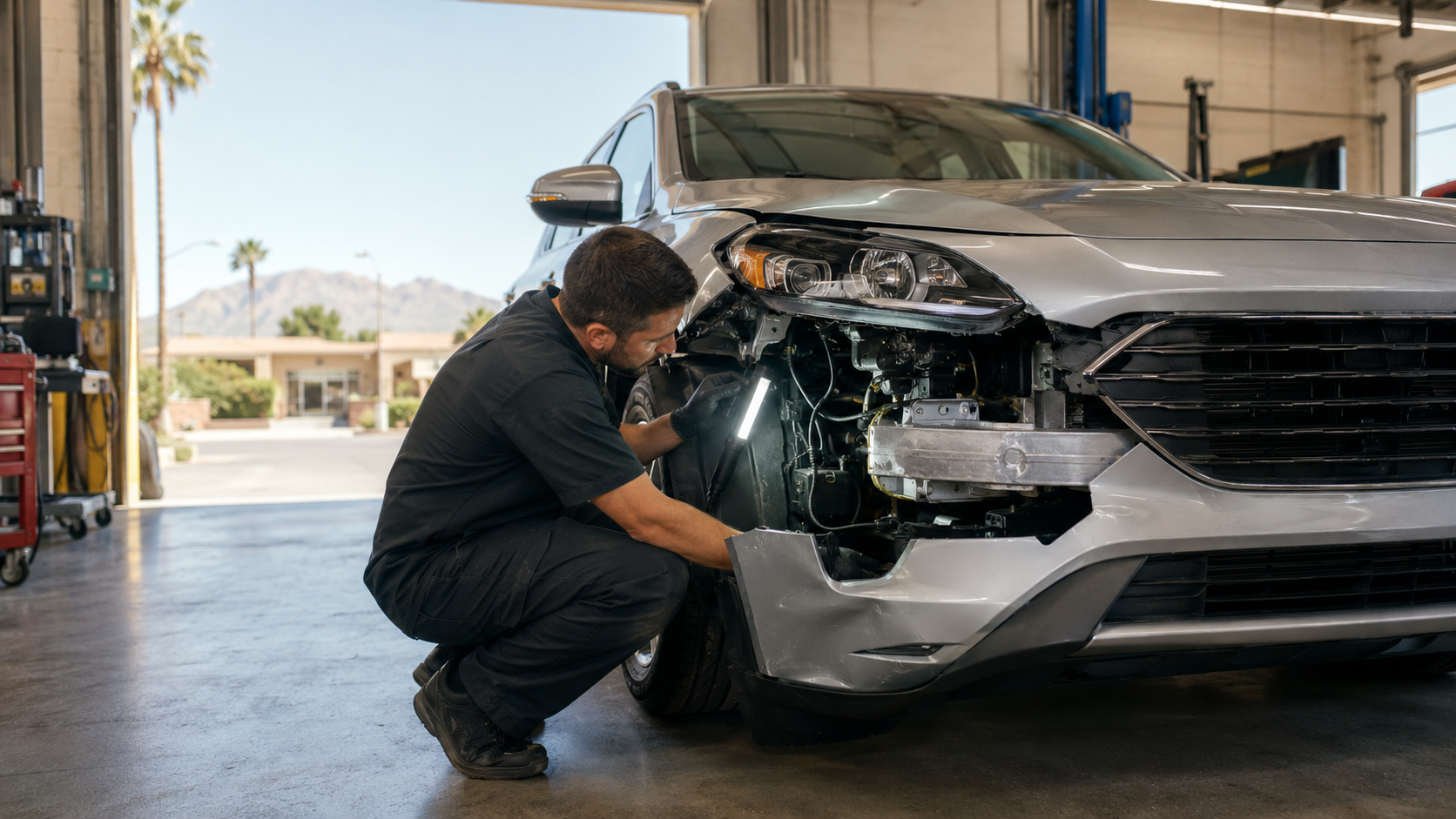
A car accident does not have to leave your vehicle crushed or undrivable to cause serious damage. Even a relatively minor collision can affect components hidden behind the bumper, beneath the body panels, or inside the vehicle’s safety systems.
Your car may look fine from a few feet away. You might only notice a scratch, dent, or cracked bumper cover. Underneath that cosmetic damage, however, there could be problems involving the frame, suspension, sensors, wiring, cooling system, or structural supports.
That is why having your vehicle inspected by a qualified collision repair facility after an accident is so important. At Arizona Collision Center, we help drivers throughout Tempe, Phoenix, Scottsdale, Mesa, Chandler, and Gilbert identify visible and hidden collision damage before it creates a larger problem.
What Is Hidden Collision Damage?
Hidden collision damage is damage that cannot be identified through a basic visual inspection of the vehicle’s exterior.
Modern vehicles are designed with bumpers, body panels, impact-absorbing materials, crumple zones, sensors, and structural components that work together during a collision. The outer panel may return close to its original position after an impact, while the components behind it remain bent, cracked, disconnected, or misaligned.
The short answer: A vehicle can have hidden damage even when the accident appears minor. Common examples include bent bumper reinforcements, frame misalignment, suspension damage, broken mounting brackets, damaged sensors, and electrical problems.
Some of these issues only become apparent after damaged panels are removed and the vehicle is carefully inspected.
Why Minor Accidents Can Cause More Damage Than Expected
The amount of visible damage does not always reveal the actual force of a collision.
A bumper cover is typically made from flexible material designed to improve appearance and aerodynamics. After a low-speed impact, the cover can flex inward and then move back toward its original shape. This may leave behind a small dent or a few scratches while concealing damage to the reinforcement bar, energy absorber, mounting hardware, or sensors underneath.
Damage can also travel through the vehicle. An impact at one corner may affect the wheel alignment, suspension, unibody structure, or panels farther away from the original contact point.
This is especially important in newer vehicles equipped with advanced driver-assistance systems. A small change in the position of a camera or radar sensor can affect how the system monitors traffic and responds to potential hazards.
Common Types of Hidden Damage After an Accident
1. Damage Behind the Bumper
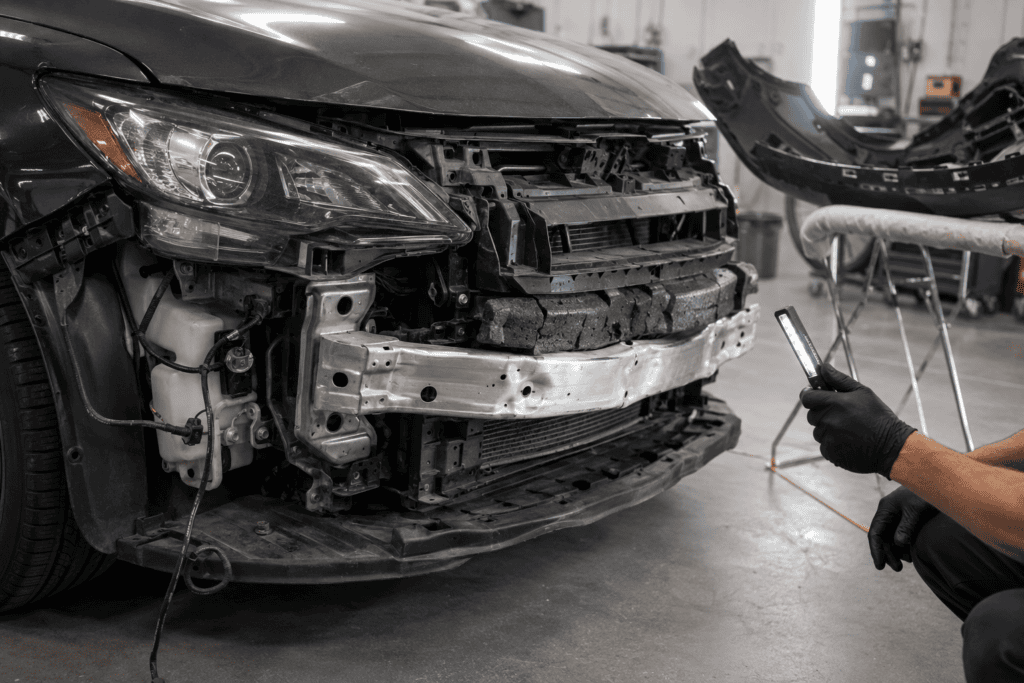
What drivers commonly call the “bumper” is often only the painted outer bumper cover. Behind it are components designed to absorb and distribute impact energy.
A collision may damage:
- The bumper reinforcement bar
- Energy-absorbing foam
- Mounting brackets and clips
- Wiring and electrical connectors
- Parking sensors
- Blind-spot monitoring sensors
- Radar units used by safety systems
A cracked bracket or compressed energy absorber may not be visible until the bumper cover is removed. If these components are not repaired or replaced correctly, the bumper may not provide the intended protection in another accident.
2. Frame or Unibody Misalignment
Many modern passenger vehicles use unibody construction, meaning the body and structural frame work together as a single unit. A collision can bend or shift parts of this structure without producing obvious exterior damage.
Possible signs of structural misalignment include:
- Uneven gaps between body panels
- Doors, the hood, or the trunk becoming difficult to close
- A vehicle pulling to one side
- Unusual tire wear
- Steering that feels different
- Wind noise or water leaks
- A vehicle that no longer appears to sit evenly
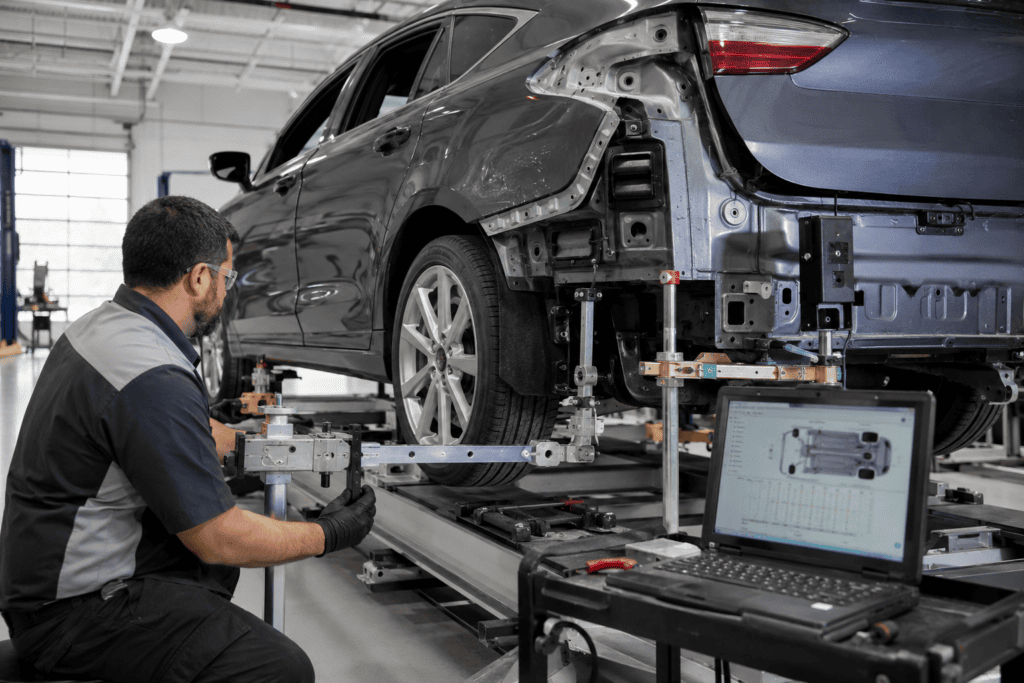
Computerized measuring equipment may be needed to determine whether the vehicle’s structure remains within manufacturer specifications.
Driving a vehicle with uncorrected structural damage may affect its handling, alignment, tire wear, and ability to protect its occupants during a future collision.
3. Suspension and Steering Damage
The force of a collision can reach the wheels, steering system, and suspension even when the point of impact is elsewhere on the vehicle.
Damage may involve:
- Control arms
- Tie rods
- Struts and shocks
- Wheel bearings
- Ball joints
- Steering components
- Subframes
- Wheels and tires
You may notice that the steering wheel is no longer centered, the vehicle pulls to one side, or the ride feels unusually rough. Other suspension problems may remain subtle until they begin causing uneven tire wear or reduced handling.
A wheel alignment alone may not correct the problem if a suspension component has been bent.
4. Advanced Driver-Assistance System Damage
Many newer vehicles have advanced driver-assistance systems, commonly called ADAS. These systems may support features such as:
- Automatic emergency braking
- Adaptive cruise control
- Lane-departure warnings
- Lane-keeping assistance
- Blind-spot monitoring
- Rear cross-traffic alerts
- Parking assistance
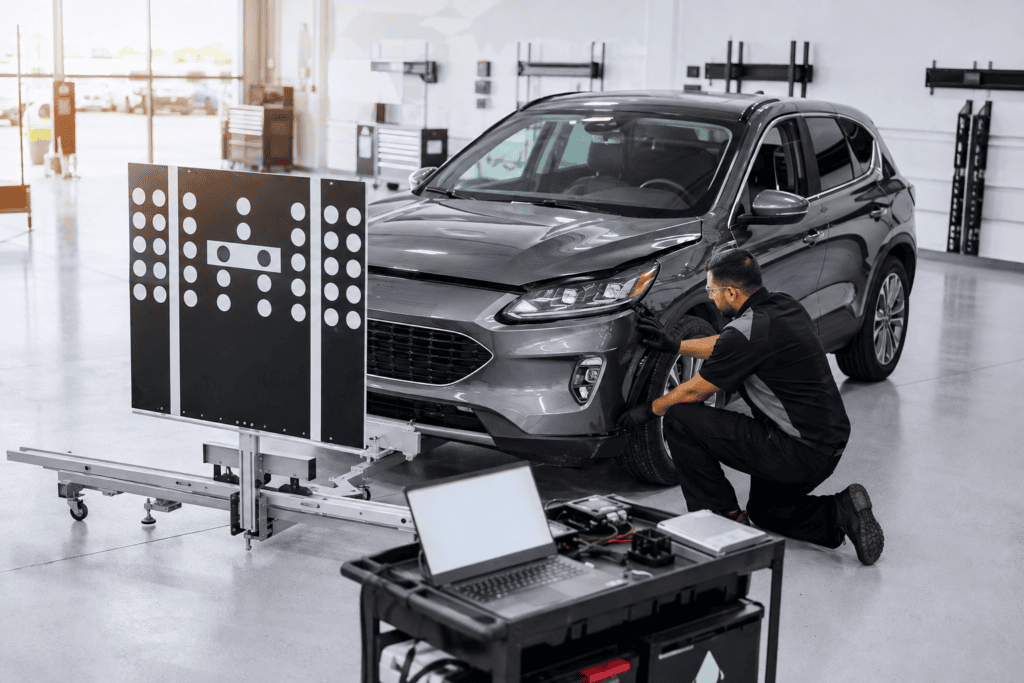
ADAS features rely on cameras, radar units, ultrasonic sensors, and other precisely positioned components. These devices may be located behind bumpers, inside mirrors, near the windshield, or around the vehicle’s exterior.
A sensor may appear undamaged but still be shifted out of position. Depending on the vehicle and repair, calibration may be required to ensure the system operates according to the manufacturer’s procedures.
The absence of a dashboard warning light does not necessarily prove that every safety system is properly aligned or calibrated.
5. Electrical and Wiring Problems
Modern vehicles contain extensive wiring, electronic modules, connectors, cameras, and sensors. Collision damage can loosen connections, pinch wires, break mounting points, or allow moisture into electrical components.
Electrical symptoms may appear immediately or develop later. Watch for:
- Warning lights
- Intermittent sensor alerts
- Malfunctioning headlights or taillights
- Power window or door-lock problems
- Backup camera issues
- Parking sensors that behave unpredictably
- Battery drainage
- Problems starting the vehicle
Because electrical faults can be intermittent, proper diagnostic testing may be necessary to find the source.
6. Cooling-System Damage
A front-end collision can damage the radiator, condenser, cooling fans, hoses, reservoirs, or mounting supports. A small crack may allow coolant or refrigerant to escape gradually instead of creating an obvious leak at the accident scene.
This is especially concerning for drivers in Tempe and the Phoenix area. Arizona’s extreme heat already places additional demand on a vehicle’s cooling and air-conditioning systems. A damaged radiator or cooling component can increase the risk of overheating.
If your temperature gauge rises, the air conditioning stops cooling properly, or you notice fluid beneath the vehicle after an accident, arrange for an inspection promptly.
7. Trunk, Cargo-Area, and Water-Seal Damage
Rear-end collisions can damage more than the bumper. The trunk floor, rear body panel, spare-tire compartment, exhaust system, taillight mounts, and weather seals may also be affected.
Hidden rear damage can result in:
- Water entering the trunk
- Exhaust noise or vibration
- A trunk lid that does not close properly
- Moisture near electrical components
- Uneven body-panel gaps
- Damage around the spare-tire compartment
Water intrusion may not appear until the vehicle is washed or exposed to rain. During Arizona’s monsoon season, a damaged seal can quickly become a more serious problem.
8. Exhaust-System Damage
An impact from the rear or underneath the vehicle can bend exhaust pipes, break hangers, damage heat shields, or create small exhaust leaks.
Possible warning signs include:
- Rattling beneath the vehicle
- Unusual exhaust noise
- New vibrations
- Reduced performance
- Exhaust odors
Any suspected exhaust leak should be inspected. Exhaust gases entering the passenger compartment can present a serious safety concern.
9. Airbag and Seat-Belt System Damage
Even when airbags do not deploy, components within the supplemental restraint system may require inspection. Seat-belt pretensioners, impact sensors, wiring, connectors, and control modules can be affected by a collision.
If an airbag or seat-belt warning light appears after the accident, do not ignore it. The system should be diagnosed using the repair procedures specified for the vehicle.
Warning Signs Your Vehicle May Have Hidden Accident Damage
Schedule a professional inspection if you notice any of the following after an accident:
- The vehicle pulls left or right
- The steering wheel is off-center
- New vibration or shaking develops
- Tires begin wearing unevenly
- Doors, the hood, or the trunk do not close normally
- Warning lights appear on the dashboard
- Parking or safety sensors stop working
- Fluid is leaking beneath the vehicle
- New rattling, scraping, or clunking sounds develop
- The vehicle feels unstable while turning or braking
- The air conditioning performs differently
- Water enters the trunk or passenger compartment
- Body-panel gaps look uneven
- Headlights or taillights no longer sit correctly
Do not assume the vehicle is safe simply because it still drives. Some collision-related problems become more expensive—or more dangerous—when they are left unaddressed.
How Does a Body Shop Find Hidden Damage?
A collision repair inspection may include several steps depending on the location and severity of the impact.
Initial Visual Inspection
A repair professional examines the exterior, panel alignment, wheels, glass, lights, and visible areas around the impact.
Diagnostic Scanning
Many modern vehicles may need to be scanned for diagnostic trouble codes. A scan can help identify faults involving airbags, cameras, sensors, restraint systems, and other electronic components.
Disassembly or Teardown
Damaged exterior panels may need to be removed so the technician can inspect the reinforcement bar, absorber, mounting points, wiring, structure, and other components underneath.
Structural Measurement
Specialized measuring equipment can help determine whether the frame or unibody structure is aligned according to vehicle specifications.
Wheel, Steering, and Suspension Inspection
Technicians may inspect wheels, tires, steering components, suspension parts, and alignment measurements when the impact could have affected how the vehicle handles.
Manufacturer Repair-Procedure Review
Repair requirements vary between manufacturers and vehicle models. Following current manufacturer procedures helps determine which components can be repaired, which must be replaced, and whether scanning or calibration is required.
Why the First Repair Estimate May Change
An initial collision repair estimate is usually based on the damage that can be seen before the vehicle is disassembled. If additional damage is discovered during the repair process, the body shop may prepare a supplemental estimate.
A supplement documents necessary repairs that could not reasonably be identified during the original exterior inspection. The shop may submit the additional documentation to the insurance company for review.
This does not automatically mean the original estimate was inaccurate. It often means the outer panels had to be removed before the full extent of the damage could be documented.
Clear photographs, diagnostic results, measurements, repair procedures, and communication between the body shop and insurance carrier can help support the supplemental repair process.
Can an Insurance Company Choose Your Body Shop?
Arizona drivers generally have the right to choose where their vehicle is repaired. An insurance company may recommend a preferred facility, but you can select a collision repair shop you trust.
The repair facility should focus on restoring the vehicle properly—not simply making the exterior look good enough to return it to the road.
Arizona Collision Center provides claims assistance to help customers better understand the collision repair process and communicate with the insurance company.
Should You Have a Repaired Vehicle Inspected?
If you are concerned that another shop missed damage, used improper repair methods, or returned a vehicle that does not feel right, consider obtaining a post-repair inspection.
A post-repair inspection may uncover issues such as:
- Damage that was never repaired
- Improperly installed components
- Missing or damaged hardware
- Poor panel alignment
- Incomplete safety-system procedures
- Structural concerns
- Evidence that manufacturer procedures were not followed
Arizona Collision Center also helps correct auto body repair mistakes made during previous repairs.
Have Your Vehicle Checked After an Accident
The safest time to identify hidden collision damage is before it leads to handling problems, uneven tire wear, electrical failures, water leaks, overheating, or compromised safety systems.
Arizona Collision Center provides professional collision repair and inspections for drivers in Tempe, Phoenix, Scottsdale, Mesa, Chandler, Gilbert, and surrounding communities. Our team repairs all types of vehicles and follows manufacturer-recommended procedures when restoring damaged vehicles.
If you were recently involved in an accident—or your vehicle does not feel right after a previous repair—call Arizona Collision Center at 480-668-3105 or request an online estimate today.
Your vehicle may look fine from the outside. Let’s make sure the parts you cannot see are safe, secure, and properly repaired.
Frequently Asked Questions About Hidden Collision Damage
Can a minor car accident cause hidden damage?
Yes. A low-speed collision can damage bumper reinforcements, mounting brackets, sensors, wiring, suspension components, and structural areas without creating severe exterior damage. The bumper cover may flex back into position and conceal problems underneath. A professional inspection is the best way to determine the extent of the damage.
Is it safe to drive a car with hidden accident damage?
It depends on what was damaged. Problems involving the steering, suspension, cooling system, tires, airbags, frame, or driver-assistance systems may affect the vehicle’s safety. If the vehicle handles differently, leaks fluid, displays warning lights, or makes new noises, avoid unnecessary driving and have it inspected.
How do body shops check for hidden damage?
A collision repair facility may use visual inspection, diagnostic scanning, panel removal, structural measurements, alignment checks, and manufacturer repair procedures. Some damage cannot be confirmed until the bumper or other exterior panels are removed.
What happens if additional damage is found after repairs begin?
The body shop typically documents the newly discovered damage and prepares a supplemental estimate. When an insurance claim is involved, the supplement may be sent to the insurance company for review and approval before additional work proceeds.
Can hidden collision damage cause problems months later?
Yes. Undetected damage can eventually result in uneven tire wear, electrical faults, water leaks, abnormal noises, alignment problems, overheating, or sensor malfunctions. These symptoms may become more noticeable as the vehicle is driven.
Should I get an inspection if my car looks fine after an accident?
An inspection is advisable when the vehicle received a meaningful impact, even if the exterior damage appears minor. It is particularly important if the collision involved a bumper, wheel, windshield, or area containing cameras and sensors—or if the vehicle drives differently afterward.



No Comments
Sorry, the comment form is closed at this time.